AI Sales Agent: How to Build One That Actually Sells
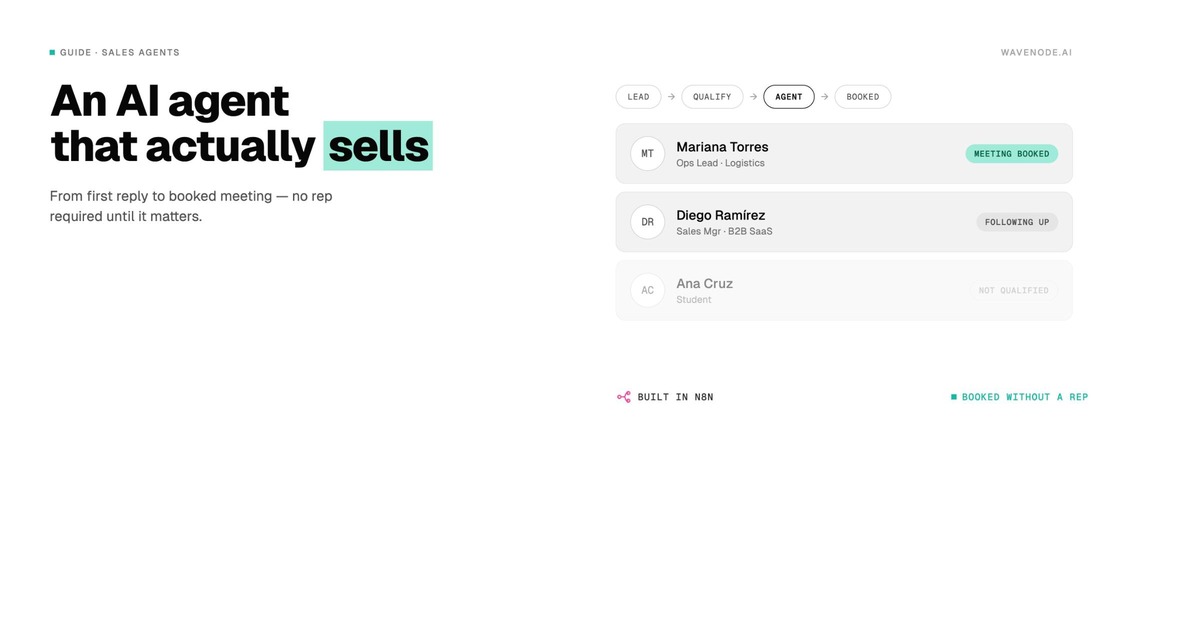
An AI sales agent doesn't just score leads — it follows up, answers questions, and books the meeting, so your reps only show up for conversations that are ready to close.
- n8n
- HubSpot
- Slack
- Notion
- OpenAI
- Zapier
- QuestionPro
- SalesSheets
- Smile
Lead scoring alone leaves money on the table
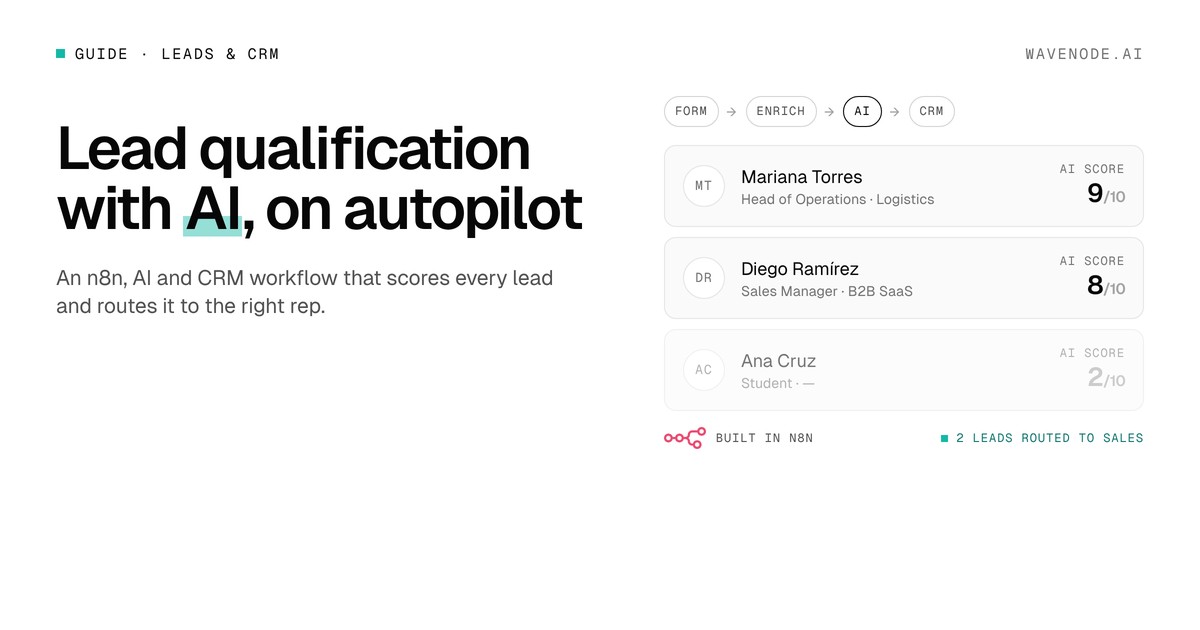
Scoring and routing incoming leads gets the right prospect to the right rep faster — our guide to automated lead qualification covers how to do that with AI. But scoring is only the first stage. Once a lead is qualified, someone still has to follow up, answer the obvious questions, and get a meeting on the calendar before the prospect moves on or talks to a competitor. That's the gap an AI sales agent closes.
What an AI sales agent actually is
An AI agent for sales is software that runs the first-contact workflow on its own: it reads a qualified lead's profile, sends a personalized follow-up, answers common questions over email or WhatsApp, and books time directly on a rep's calendar once the prospect is ready.
Some teams call the same thing an AI SDR, since it covers the ground a human sales development rep normally would — outreach, qualification, and handoff — without a rep touching every lead manually.
💡 Real example: The same B2B SaaS client that cut lead qualification from 3 hours a day to 12 minutes went a step further and connected an AI sales agent to that workflow. Leads scoring 7+ now get a personalized follow-up within minutes and a booking link the moment they reply — without a rep touching the inbox.
Want your qualified leads to get a response before you've even opened your inbox?
Design my sales agent →How the agent runs end-to-end
Here's the workflow we implement on n8n:
- Trigger: A lead clears the qualification score from your lead scoring workflow and lands in the agent's queue.
- First touch: The agent drafts and sends a personalized email or WhatsApp message referencing the lead's industry and stated need.
- Conversation: It answers follow-up questions — pricing ranges, timelines, how the product works — using your agent's knowledge base.
- Scheduling: When the lead is ready, the agent offers available times and books the meeting directly on the rep's calendar.
- Handoff: The rep receives a summary of the conversation before the call, so they walk in with context instead of starting cold.
What to automate first
Teams rarely automate the whole flow at once, and they shouldn't. Start with follow-up emails for leads that are already qualified — it's the lowest-risk step and the time savings are immediate. Add WhatsApp or chat next, once the agent's email responses are consistent. Scheduling comes last: hand it full control of the calendar only after you've seen enough conversations to trust its judgment on when a lead is actually ready.
Where the agent hands off to a human
An AI sales agent is built to hand off, not to replace the rep. Pricing negotiation beyond standard terms, enterprise or multi-stakeholder deals, and any conversation where sentiment signals friction or confusion should route straight to a human — with the full conversation history attached, so nothing gets repeated.
Part of a bigger sales automation strategy
An AI sales agent works best as the second half of a pipeline that starts with AI lead qualification: leads get scored and routed, then the agent takes over outreach and scheduling, and every interaction updates your AI-powered CRM automatically. Time that reps would otherwise lose to non-selling work, as Salesforce's State of Sales research tracks it, goes back into the conversations that actually close.
Underneath it all is the same n8n automation layer connecting your tools — so sales automation doesn't mean five disconnected pieces of software, it means one workflow your team barely has to think about.
FAQ: AI sales agents
What is an AI sales agent?
It's software that handles the first-contact sales workflow on its own: following up with qualified leads, answering common questions, and booking meetings directly on a rep's calendar, acting as an extension of the sales team.
What's the difference between an AI sales agent and an AI SDR?
The terms are often used interchangeably. AI SDR tends to emphasize the outbound and qualification role a human sales development rep would normally play, while AI sales agent usually covers the full workflow, including follow-up and scheduling.
How long does it take to build an AI sales agent?
A basic n8n + HubSpot + OpenAI workflow that handles follow-up and scheduling can typically be deployed in 2-3 weeks, depending on how many tools it needs to connect to.
Does an AI sales agent replace sales reps?
No. It handles the repetitive top-of-funnel work — follow-up, answering routine questions, scheduling — and hands off to a human rep once a conversation needs judgment, negotiation, or a relationship.
Want to see how an AI sales agent would look in your current stack?
Automate my sales flow →